
Background

Evidence & Impact

Scientific credibility backed by peer-reviewed data and real-world outcomes.

Avident Impact
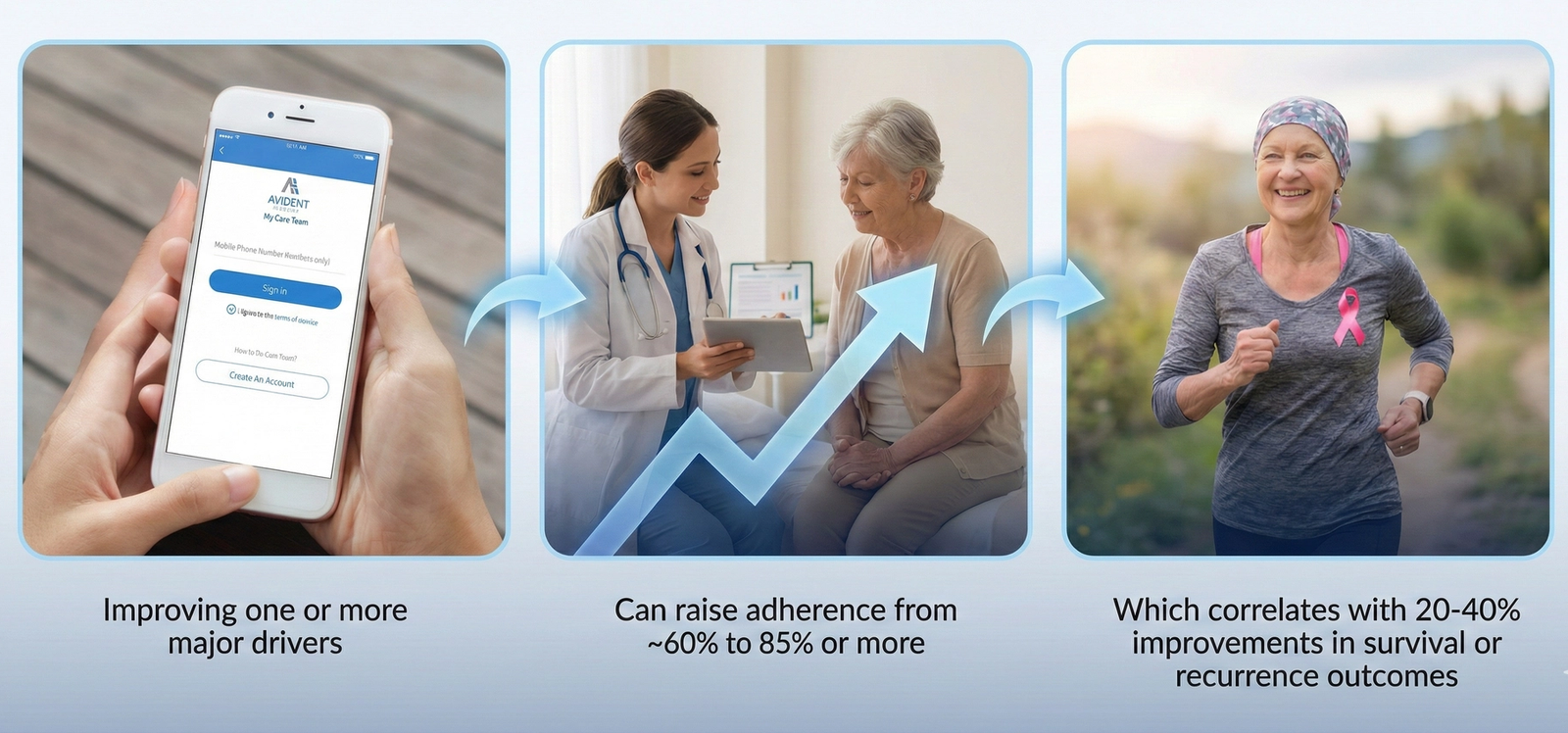
Avident Impact - Improving outcomes through better adherence

Adherence Improvement

85%+

Data shows MNP increases adherence from ~60% to over 85%.

Outcome Improvement

20-40%

Correlated improvements in overall treatment outcomes.

Real-World Evidence

Proven outcomes from clinical studies and real patient experiences

Breast Cancer Adherence
High-Risk Oncology Profile

Breast Cancer Adherence

Endocrine Therapy & Long-Term Survival

Adherence to adjuvant endocrine therapy (ET) is directly tied to survival in hormone receptor–positive breast cancer. Non-adherence increases recurrence and death risk significantly.

Key Highlights

  • Non-adherence doubles risk of recurrence/death
  • Only ~75% take ET as prescribed
  • Economic burden of non-adherence is substantial
Real-World Adherence
41-72%
Long-term rates

The Challenge

Consistent, long-term support for patients on multi-year oral therapies results in "medication fatigue" and drop-off.

The Gap

Side effect mismanagement Lack of symptom monitoring Financial toxicity Fragmented care team communication

The Need

MNP provides continuous engagement through symptom monitoring, side-effect management, and financial navigation resources, directly addressing the root causes of discontinuation.

Oral Anticancer Medication Adherence
High-Risk Oncology Profile

Oral Anticancer Medication Adherence

Targeted Therapies & Oral Chemotherapy

Oral anticancer agents—including targeted therapies and oral chemotherapy—offer patients the convenience of at-home treatment, but adherence rates vary dramatically, often falling below the 80% threshold needed for full therapeutic effect.

Key Highlights

  • Adherence ranges from 16-100%, often below optimal
  • Poor adherence leads to disease progression
  • Higher healthcare utilization with non-adherence
Therapeutic Threshold
80%
Adherence required for full efficacy
Healthcare Impact
↑ Visits
Non-adherent patients

The Challenge

Complex regimens, fluctuating toxicities, and lack of real-time monitoring lead to suboptimal drug exposure, disease progression, and reduced survival despite oral agents being designed to match IV efficacy.

The Gap

Inadequate symptom self-management Limited patient education on side effects No proactive adherence monitoring Disconnected care coordination

The Need

MNP addresses these challenges through literacy-adaptive education on managing side effects, real-time symptom tracking with clinical alerts, and caregiver engagement to support patients through complex oral therapy regimens.